Rolex Replica Watches : Models, Movements, Quality and Buying Guide
Comparing Rolex replica watches is difficult because the market uses broad labels for products that can differ substantially in size, movement, function, finishing and build quality. Terms such as “AAA”, “Swiss movement” and “Super Clone” are not universal technical standards, so they should not replace model-specific checks. A better comparison starts with the Rolex family you are trying to match, then looks at the dimensions, functions and visible details that should be present, and finally asks which seller claims can actually be supported by evidence.
This homepage is the starting point for that process. It covers the main Rolex-style families, movement terminology, quality checks, current-versus-legacy model names and the difference between a reference specification and a replica claim. For deeper information, use the individual model guides and the dedicated Super Clone vs Swiss movement guide.
Start with the Rolex model, not the seller grade
A seller grade tells you very little if the watch does not match the function and proportions of the model it is supposed to represent. A Submariner-style watch is mainly judged by dive-watch proportions, bezel geometry and date execution. A GMT-Master II needs the correct GMT behavior, not just a two-colour bezel. A Daytona should be assessed as a chronograph, while Datejust and Day-Date versions require closer attention to size, calendar layout, bezel and bracelet combinations.
That is why this site separates model pages rather than using one generic “best replica Rolex” checklist for everything. The reference points below are based on Rolex’s current catalogue at the time of this update, while the replica-specific checks focus on what can be seen, measured or demonstrated.
Compare the main Rolex replica model families
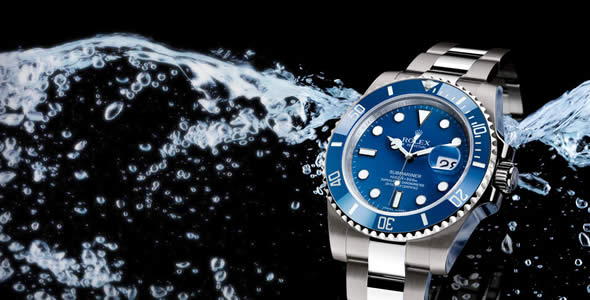
- Submariner: the current Rolex reference is 41 mm. Compare case profile, bezel action and alignment, date/no-date layout, bracelet taper and any water-resistance evidence.
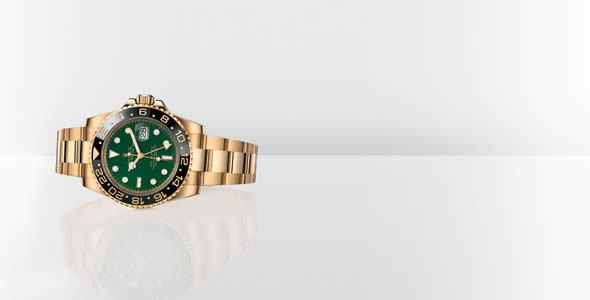
- GMT-Master II: the current family is 40 mm. Check GMT-hand behavior, local-hour adjustment, hand stack, 24-hour bezel alignment, date and movement architecture.
- Cosmograph Daytona: the current chronograph is 40 mm. Verify whether the chronograph actually works, then compare sub-dial layout, case thickness, tachymeter execution and movement identity.
- Datejust: current sizes include 31, 36 and 41 mm. Compare the correct size, bezel and bracelet combination, dial/date alignment, Cyclops position and overall proportion.
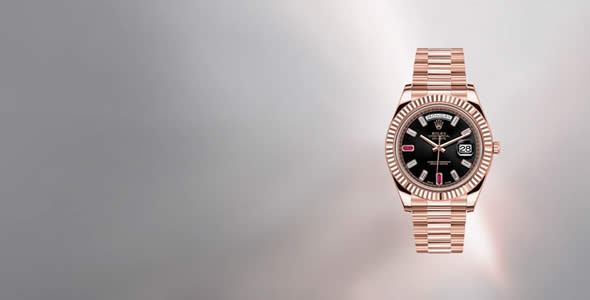
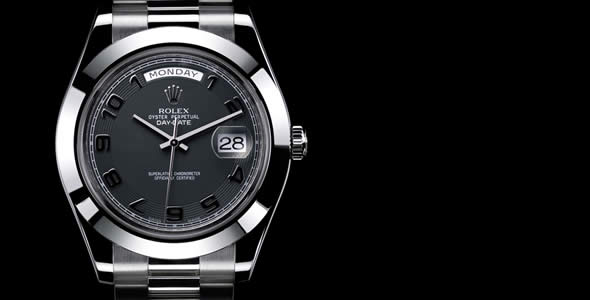
- Day-Date: current sizes are 36 and 40 mm. Look closely at day/date alignment, calendar operation, bracelet construction and the evidence behind precious-metal claims.
- Oyster Perpetual: current sizes include 28, 31, 34, 36 and 41 mm. Its simple three-hand format puts more emphasis on dial execution, case proportion, bracelet fit and movement specification.
- Yacht-Master: current sizes include 37, 40 and 42 mm. Compare the bidirectional bezel, case size, dial/date layout, bracelet or strap construction and material claims.
- Yacht-Master II: the new-generation 2026 model is 44 mm. Generation identification matters because Rolex redesigned the countdown system: the current model programs it through the lower pusher rather than the previous Ring Command programming method.
Rolex’s current model finder is the baseline we use for present-day model names and sizes. The official 2026 Yacht-Master II page documents the redesigned countdown operation. Genuine Rolex specifications are reference points only; they do not prove that a replica uses the same materials, movement, tolerances or performance.
Movement terms: what “Swiss”, “clone” and “Super Clone” actually tell you
Movement wording is one of the most confusing parts of the replica-watch market. “Japanese automatic” usually describes a movement origin or category, but it does not identify the exact calibre. “Swiss movement” is also incomplete unless the seller provides a specific movement identity; even a genuine Swiss movement would not by itself make the complete watch Swiss-made. “Clone calibre” generally means a movement intended to reproduce the layout or operating behavior of another calibre, but the phrase does not guarantee accuracy, durability or parts interchangeability.
“Super Clone” is broader still. It is a seller-defined marketing term rather than an independent technical grade. Two watches sold under the same label may use different movements or have different case and dial execution. When the movement matters, compare the exact calibre claim, crown-setting sequence, date change, GMT or chronograph behavior, power-reserve claim and whether clear movement photographs or functional video are available.
What separates a better replica from a poor one?
Quality is better judged through a group of specific checks than through one headline label. The most useful checks depend on the model, but the following areas repeatedly matter:
- Case proportion: diameter alone is not enough. Thickness, lug shape, crown-guard profile and how the bracelet meets the case can change the overall look.
- Dial execution: marker alignment, printing, hand length, date-window position and colour consistency are easier to compare than vague claims such as “1:1”.
- Bezel and crystal: check bezel type, rotation direction where relevant, insert alignment, markings and how the crystal sits above the case.
- Bracelet and clasp: end-link fit, taper, articulation, clasp construction and adjustment system affect both appearance and wear.
- Movement and functions: the watch should perform the functions associated with the model. A GMT, chronograph, annual calendar or regatta countdown should not be judged from a static product photo alone.
- Claims that need evidence: water resistance, precious-metal content, gem authenticity and movement origin require more than marketing text. A pressure-test result, material test or clear movement identification is more useful than a grade name.
Current models and legacy Rolex names should not be mixed together
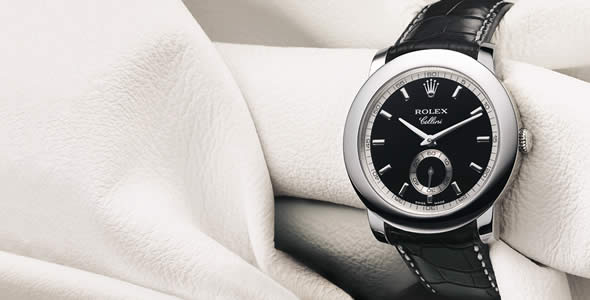
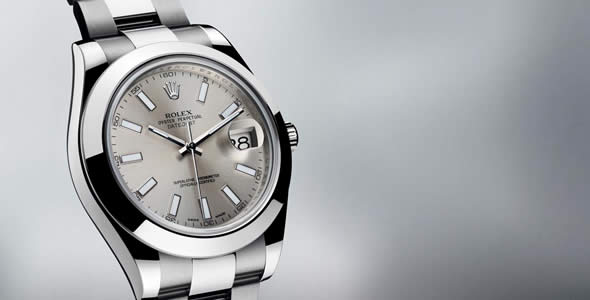
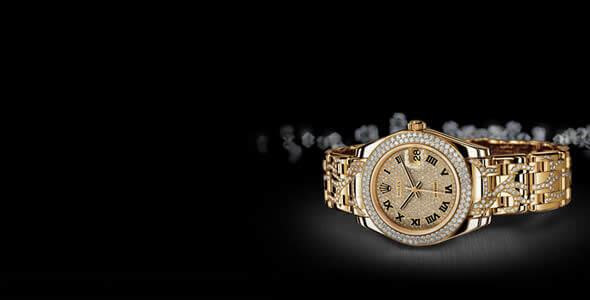
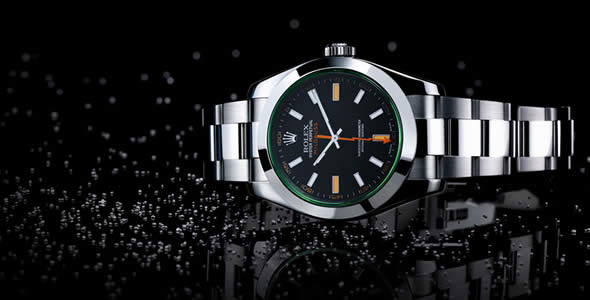
Search results often combine current Rolex collections with discontinued names because older replica pages remain online for many years. That can create inaccurate comparisons. Current model families on this site are written against the current Rolex catalogue, while pages such as Milgauss, Cellini, Datejust II, Day-Date II and Pearlmaster are treated as legacy references rather than presented as current collections.
This distinction matters because a discontinued model should be compared with the specifications and design language of its own generation. It should not automatically inherit the size, movement or configuration of the nearest current Rolex model.
Choose by function and wrist fit before colour
If the goal is a simple everyday watch, the Oyster Perpetual removes complications and puts more emphasis on proportion and dial quality. Datejust adds the date and a wider range of size, bezel and bracelet combinations. The Submariner is the obvious dive-watch design, while the GMT-Master II and Explorer II add 24-hour functionality for buyers who care about a second time zone.
Chronograph buyers should start with the Daytona and verify the movement and sub-dial operation. Larger wrist presence comes from models such as Deepsea, Sky-Dweller and Yacht-Master II, but size alone should not be the deciding factor: thickness, lug-to-lug length, bracelet balance and the actual function set also affect how the watch wears.
How we use official Rolex specifications
Official Rolex information is used here as a reference baseline for current size, model status and genuine-watch functions. Rolex currently lists the Submariner at 41 mm, GMT-Master II at 40 mm, Datejust in 31/36/41 mm sizes, Day-Date in 36/40 mm sizes, Oyster Perpetual in 28/31/34/36/41 mm sizes, and Yacht-Master in 37/40/42 mm sizes. The 2026 Yacht-Master II is a 44 mm model with a redesigned countdown operated through the lower pusher.
Those genuine specifications should not be copied directly into a replica listing as proof of replica performance. A replica can visually target the same model while using a different movement, case thickness, material or water-resistance capability. Our model guides therefore separate “Rolex reference fact” from “replica claim”.
Buying and availability
For visitors comparing currently available versions, the Rolex model index is the central navigation page. It brings the major model families together and contains the site’s clearly disclosed availability section. Individual model guides remain focused on comparison and verification rather than repeating the same retailer link across every page.
Rolex replica FAQ
What does “Super Clone Rolex” mean?
There is no universal independent standard for the term. It is commonly used by sellers to describe a higher-tier replica, but the label alone does not identify the movement, materials or level of finishing. Compare the actual model, movement and QC evidence instead.
Does “Swiss movement” mean the watch is Swiss-made?
No. A movement-origin claim and a complete-watch origin claim are different things. Ask for the exact calibre or movement identification rather than assuming that the phrase “Swiss movement” proves the origin or quality of the entire watch.
Which details are easiest to verify before ordering?
Case size, dial layout, bezel type, date alignment, bracelet style and visible function behavior are relatively practical to compare from measurements, photographs and video. Internal materials, water resistance, gem authenticity and long-term reliability require stronger evidence.
Can a replica use the genuine Rolex water-resistance rating?
No genuine Rolex depth rating should be assumed for a replica. Water resistance is a property of the individual assembled watch and should be supported by an appropriate pressure test if it matters to the buyer.
Understanding Swiss and Super Clone Movement Terms
Movement specifications can vary between individual watch models and versions.
Terms such as “Swiss movement” and “Super Clone” should be treated as starting
points for comparison rather than universal quality standards.
Before choosing a watch, compare the exact movement specification, available
functions, case dimensions and other model-specific details instead of relying
only on a general grade name.