



Rolex Day-Date II Replica: Legacy 41 mm Calendar Guide
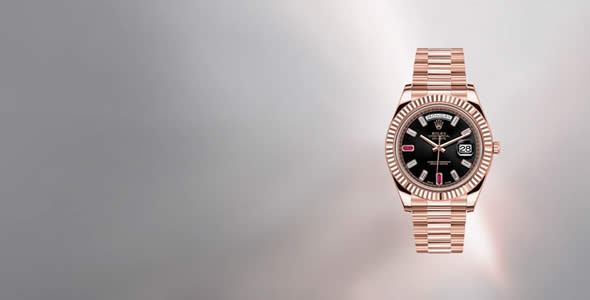
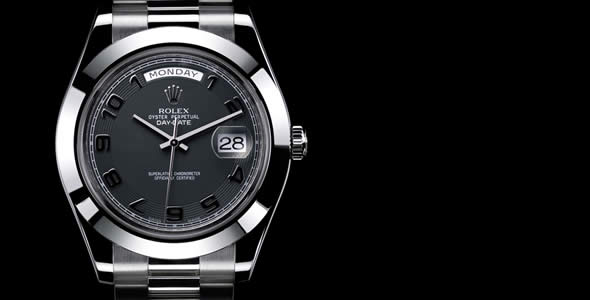
Day-Date II is a discontinued 41 mm generation and should not be confused with the current Day-Date 40. The names are close and the designs share obvious family traits, so replica listings often collapse them into one category. That creates inaccurate comparisons.
If a watch is marketed as Day-Date II, the first question is whether its case and dial proportions actually target that legacy 41 mm generation.
41 mm Day-Date II vs current Day-Date 40
The one-millimetre difference is not the main issue. Case shape, bezel proportion and overall visual mass matter more. A modern Day-Date 40-style case relabelled as Day-Date II may look plausible in a product thumbnail but does not reproduce the older generation accurately.
Day aperture and date window
As with any Day-Date, the weekday display should be centered across multiple day names, not just one. The date should sit centrally under the Cyclops. Ask for a calendar-operation video if functional fidelity is important.
Movement choice in a legacy replica
Because the model is discontinued, there is no requirement that a replica use a period-correct movement to be a useful watch. But the seller should state what is installed. Buyers can then decide whether they prioritize visual fidelity, clone-style mechanics or serviceability.
Bracelet and larger-case balance
The President-style bracelet needs enough visual weight for the 41 mm case without looking oversized at the clasp. Check end-link fit, taper and articulation. A bracelet borrowed from a smaller Day-Date pattern can make the watch head look disproportionately large.
Material claims
Legacy Day-Date references are strongly associated with precious-metal construction. That should not be used as evidence for a replica’s material. Ask whether the watch is plated, coated, wrapped or solid material, and treat gem claims separately.
Day-Date II QC checklist
- Confirm the listing targets Day-Date II, not Day-Date 40.
- Compare case/bezel proportions with the legacy 41 mm generation.
- Check day centering and date/Cyclops alignment.
- Verify calendar operation and movement identity.
- Inspect bracelet scale and clasp.
- Require evidence for precious-metal or gem claims.
Why legacy Day-Date II listings often become mixed-generation products
After the Day-Date II was discontinued, sellers continued using the name while updating dials, bracelets and movements. As a result, some current listings combine a 41 mm Day-Date II-style case with visual cues borrowed from later Day-Date 40 models. That does not automatically make the product poor, but it means the seller should not present it as an exact historical reproduction.
When reference fidelity matters, compare the case, bezel and dial as one generation. When it does not, evaluate the watch as a custom Day-Date-style build and focus on calendar function, bracelet quality and movement serviceability.
Calendar testing is more valuable than static QC photos
The weekday window is wide, and different day names have different lengths. A watch that looks centered on “MONDAY” may look off on “WEDNESDAY” or “SATURDAY”. Ask for a video cycling through several days and dates. Also watch whether the day and date switch cleanly or drift gradually for hours around midnight. The exact behavior will depend on the installed movement, but the listing should describe it honestly.
Day-Date II FAQ
Is Day-Date II still current?
No. Rolex currently lists Day-Date in 36 and 40 mm sizes.
Can a Day-Date 40 replica substitute for Day-Date II?
It can serve a similar aesthetic purpose, but it is not the same generation and should not be described as an exact Day-Date II reproduction.
Is 41 mm enough to identify Day-Date II?
No. Diameter is only one clue; bezel, lugs, dial and bracelet proportions also matter.