

Replica Rolex quality control is where many first-time buyers become more anxious than they need to be. A QC album can make a watch look perfect in one photo and suspicious in the next. A slightly tilted camera can make an index appear crooked. Reflections can make a Cyclops look off-center. Protective film can look like scratches. A small black line beside a solid end link can be mistaken for a real gap. At the same time, a genuinely bad date wheel, damaged dial, misaligned bezel, non-working function, or visibly poor finishing can be missed if the buyer only asks whether the watch “looks good.”
This guide is designed to solve that problem. It combines recurring questions seen in replica-watch QC communities with real photographs from our own archive originally published on WristWatchSpot and Susan Reviews. The goal is not to chase microscopic perfection. The goal is to separate real sample-level defects from factory-wide characteristics, camera-angle problems, and minor cosmetic differences that are unlikely to matter on the wrist.
Important: QC is not an authenticity test and it is not a promise that a replica matches a genuine Rolex in materials, water resistance, movement construction, or long-term reliability. QC answers a narrower question: Is this specific watch acceptable compared with what this model and factory are normally capable of delivering?
The Most Important QC Rule: Sample Defect vs Factory Trait
Before you GL or RL anything, identify what type of issue you are looking at. This single distinction prevents many unnecessary rejections.
- Sample-level defect: one crooked marker, a damaged hand, badly centered date, obvious scratch under the crystal, large SEL gap, broken chronograph reset, or a function that does not work as promised. A replacement watch may solve the problem.
- Factory or batch characteristic: crystal height, dial tone, hand shape, movement decoration, bezel color, date font, clasp engraving, or case profile that appears consistently on that factory/version. Rejecting one watch and asking for another from the same batch may produce the same feature again.
- Reference difference: a difference between the replica and the genuine watch. This matters when evaluating overall accuracy, but it is not automatically a QC defect. If every example from that factory shares the same difference, QC cannot “fix” it.
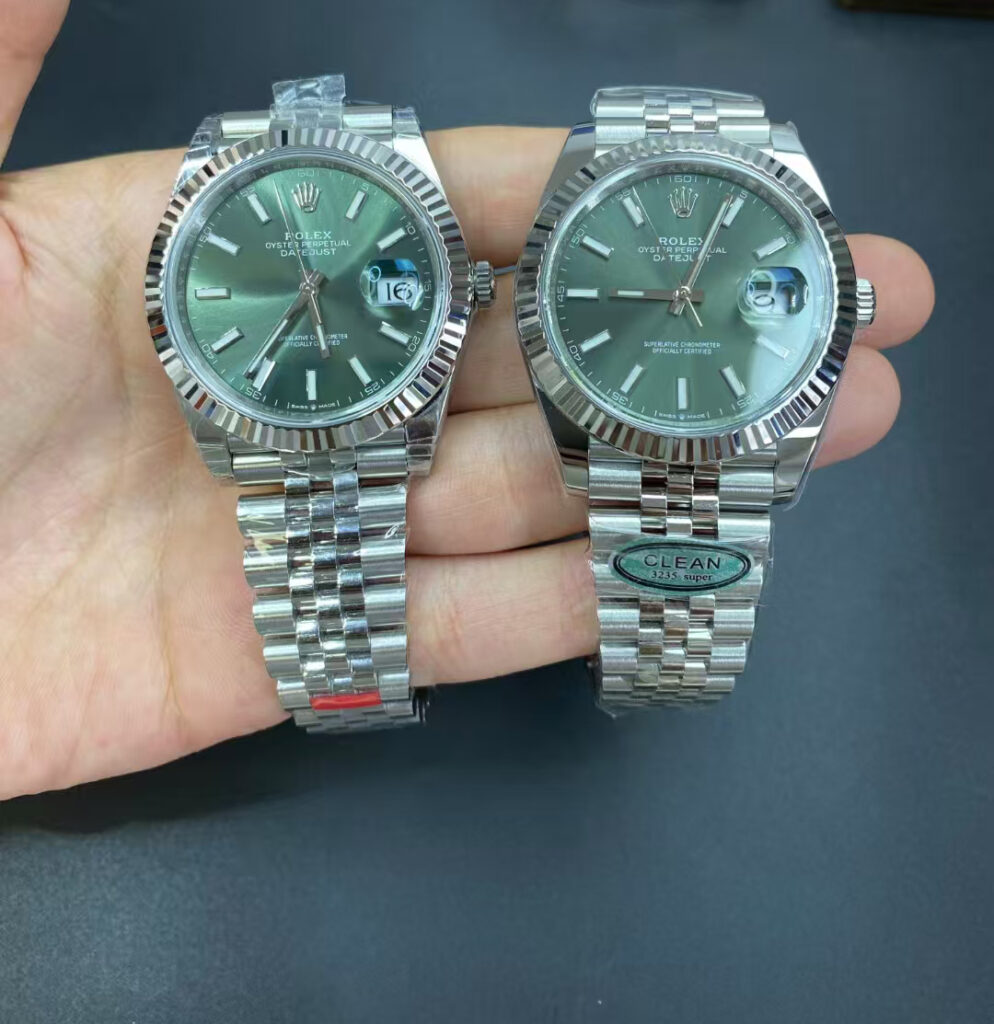
This distinction is especially important because modern high-end replica factories often produce watches with consistent “known traits.” For example, our Clean-vs-VS Datejust comparison showed differences in green dial tone, sunray strength, rehaut engraving size, hand-axis appearance, crystal-edge finishing and movement decoration. Those observations help with factory selection. They should not be confused with sample QC.
What Photos and Videos Should You Ask for Before QC?
A useful QC set should allow you to inspect the watch without guessing. At minimum, request or look for:
- a straight-on dial photo;
- left and right case-profile photos;
- close-ups of the date and Cyclops if the model has a date;
- bezel and 12 o’clock pip close-ups where relevant;
- photos of all four lug/SEL areas;
- bracelet and clasp photos;
- rehaut photos from several angles;
- a lume photo if lume application matters to the model;
- a movement/function video for GMT, chronograph, annual-calendar or countdown models;
- a timegrapher photo or video.
Whenever possible, ask for one straight, neutral-light photo. Warm lighting changes dial and bezel colors. Wide-angle phone lenses distort case shape. A photograph taken from above but slightly off-axis can make markers, date windows and Cyclops alignment appear worse than they really are.
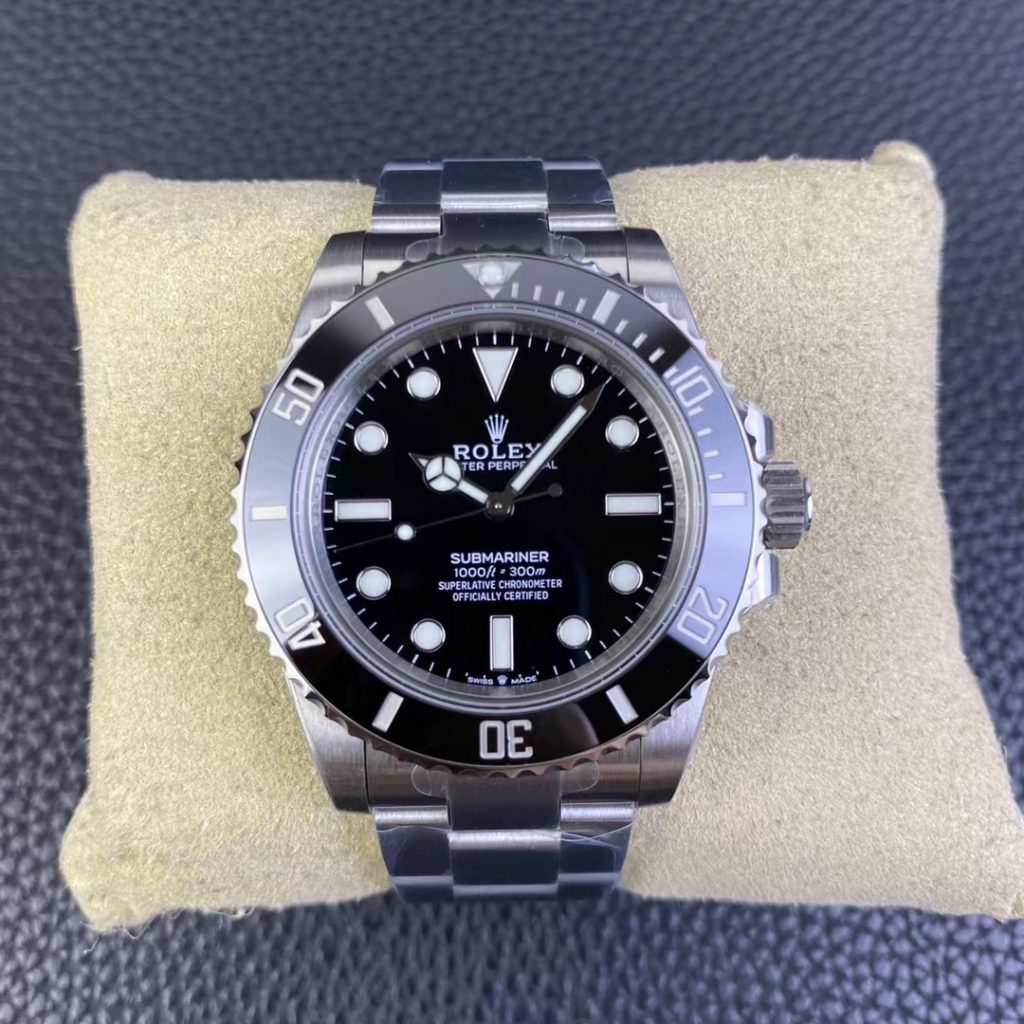
Our GL vs RL Severity Framework
Instead of treating every imperfection equally, classify the issue by severity.
Level 1 — Strong RL Candidates
These are defects we would take seriously because they affect function, are immediately visible, or indicate poor assembly of that specific watch:
- non-working GMT, chronograph, date, day, annual-calendar or countdown function;
- chronograph hand that cannot reset correctly;
- severely crooked or misplaced hour marker;
- multiple visibly misaligned markers on the same dial;
- date numerals cropped by the window or touching the frame badly;
- Cyclops obviously rotated or substantially off the date window;
- large bezel/pip misalignment visible without magnification;
- clear light-through SEL gap on a Rolex-style solid-end-link bracelet;
- major scratch, chip, dent or contamination that is not protective film;
- broken clasp or badly damaged bracelet;
- wrong movement/function compared with what the seller specifically represented.
Level 2 — Ask for More Evidence Before RL
These issues can be real, but photographs often exaggerate them:
- slightly tilted index;
- rehaut crown or lettering not perfectly aligned;
- date sitting slightly high, low, left or right;
- small SEL line with no light visible through it;
- bezel that looks one click off;
- possible dust or scratch visible in only one photo;
- Cyclops tint or AR color;
- crystal that appears too high in a single angle;
- timegrapher reading that may have been taken with the wrong lift-angle setting.
Level 3 — Usually Cosmetic, Not Automatic RL
- microscopic dial-print variation only visible at heavy zoom;
- tiny rehaut engraving variance;
- small index difference that disappears when the image is viewed at actual watch size;
- slight date centering variation that remains fully inside the window;
- a black line at the SEL joint when no light passes through;
- factory-wide crystal, dial, bezel or hand characteristic that another example from the same batch will probably share.
1. Index Alignment: Do Not Let the Alignment Tool Create a Problem
Hour-marker alignment is one of the most discussed QC topics. It is also one of the easiest areas to misjudge because the alignment grid assumes the photograph is perfectly straight. If the watch is tilted, the grid magnifies the camera error.
Start with your eyes. Check the 12, 3, 6 and 9 positions first. Then check whether the remaining markers point naturally toward the center of the dial and their corresponding minute-track positions. One tiny error is not the same as a dial where multiple indices are obviously rotated.
A useful rule is proportionality: one minor index deviation may be acceptable; several obvious deviations on one dial become a stronger RL case. Current RepTimeQC guidance makes the same distinction and warns that replica watches should not be judged as though every marker must meet genuine-production tolerances.
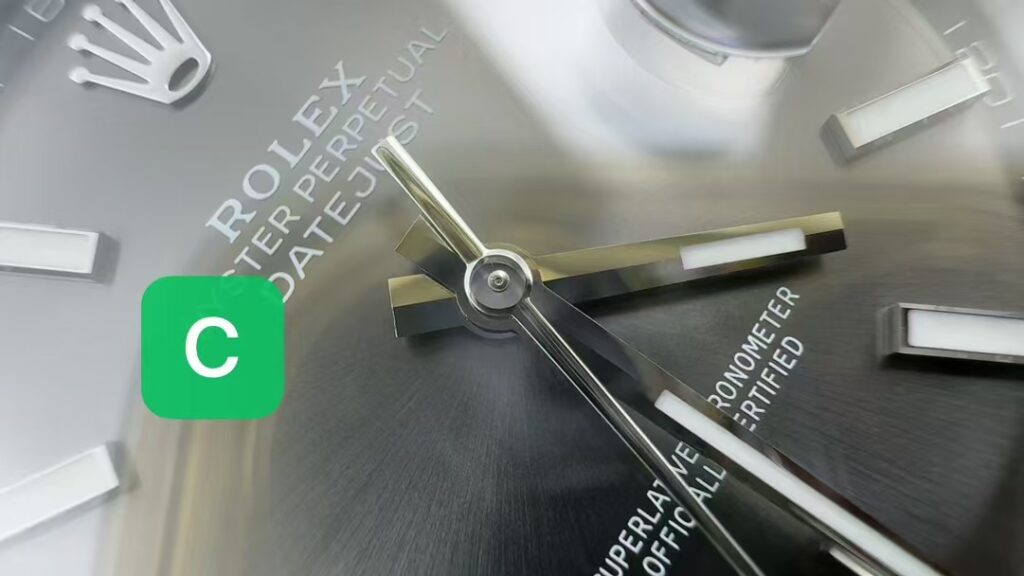
2. Date Wheel and Cyclops: Centering Matters More Than Internet Perfection
Date QC should answer several separate questions:
- Is the numeral fully visible?
- Is it reasonably centered vertically and horizontally?
- Do different dates sit differently on the same wheel?
- Is the Cyclops physically straight over the date window?
- Does magnification look coherent across several photos?
A date that sits a little high or a little to one side is not automatically a reject. A much stronger problem is a numeral that is visibly cropped, touches the edge of the window, or remains badly off-center across multiple dates.
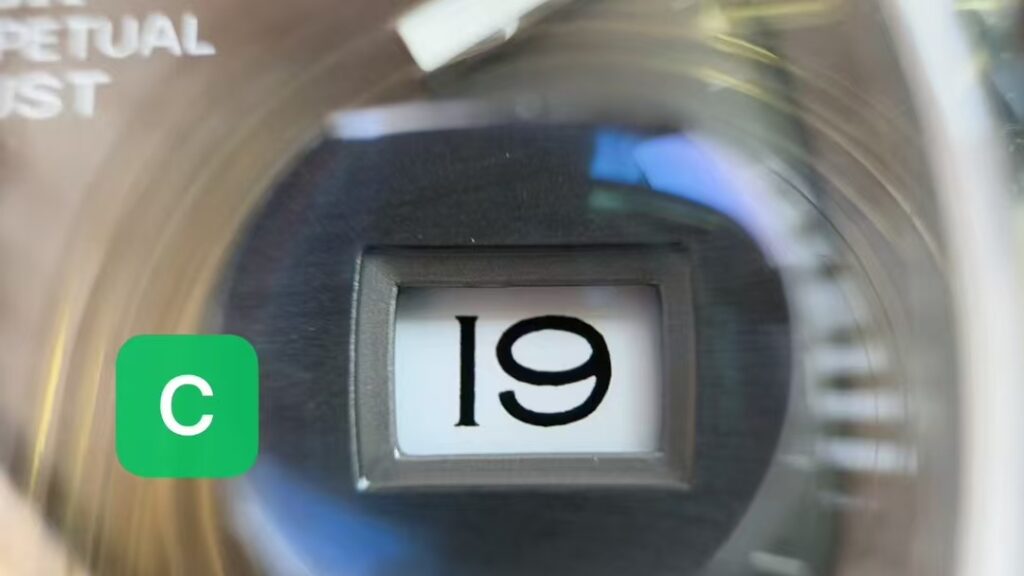
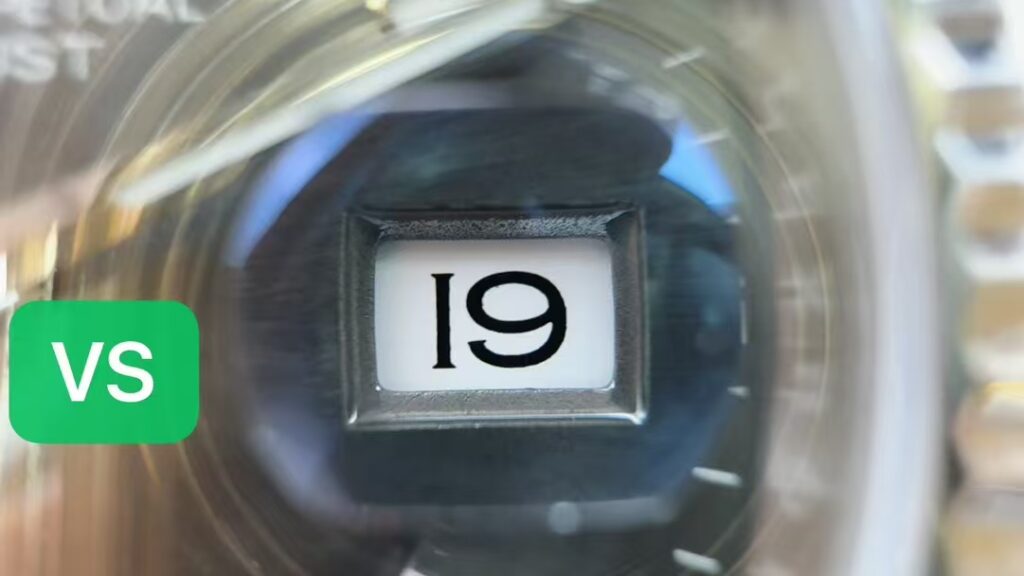
These two Datejust images illustrate an important point: date-font shape and window appearance can vary by factory. If your concern is that one factory’s “9” looks different from another factory’s “9,” that is a factory-comparison question. If the number is physically cut off or the date disc is badly displaced on your specific watch, that is a QC question.
Historical Reference: Why One Photo Is Not Enough
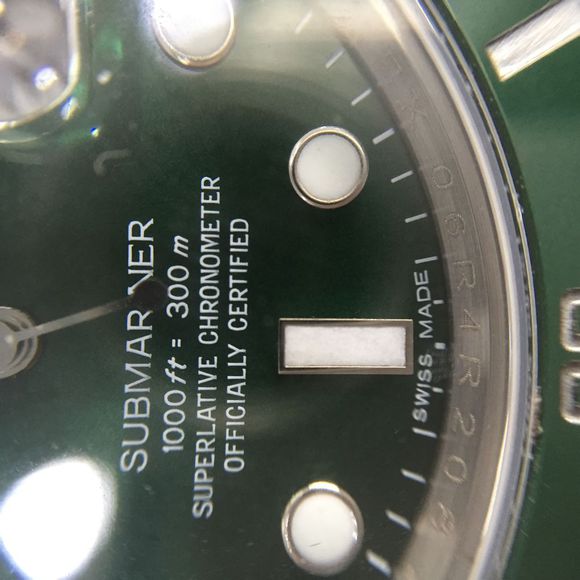
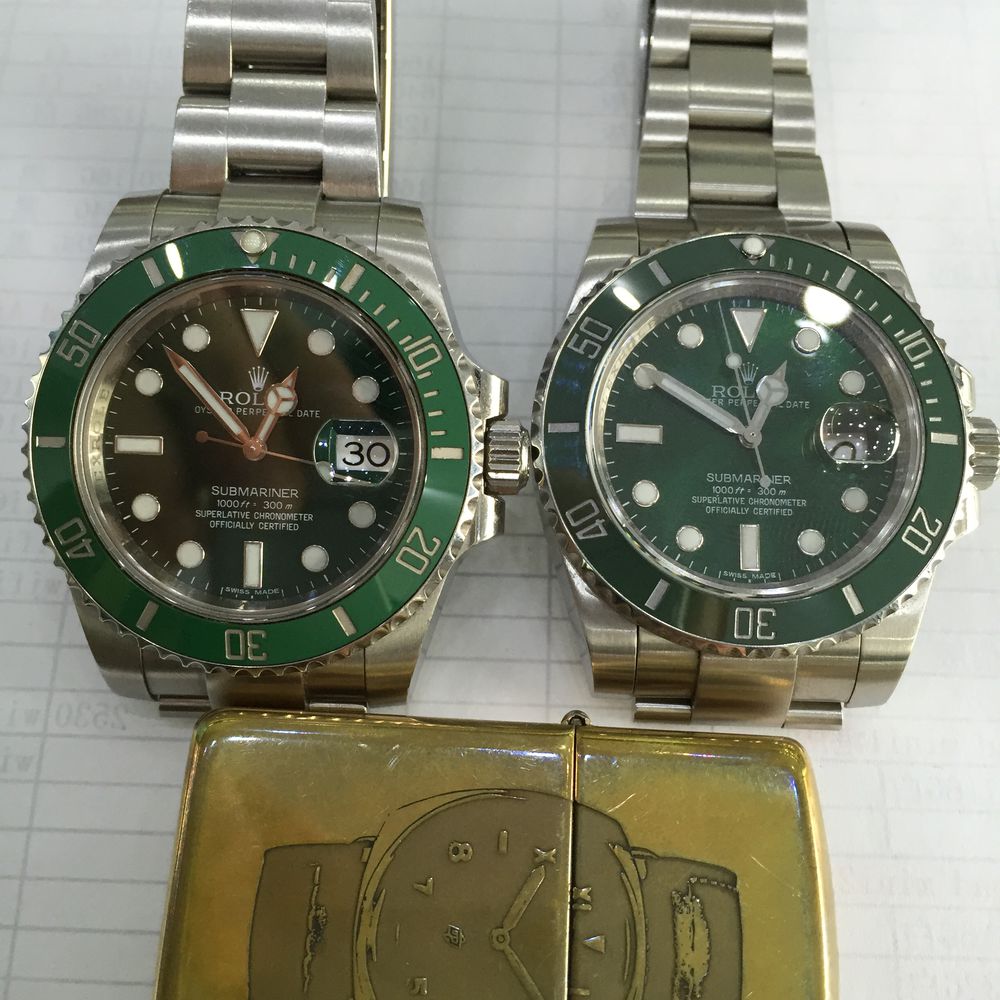
Our older genuine-vs-replica Submariner archive is useful because it shows that some differences are obvious at macro scale while others are surprisingly subtle. These photos are historical and should not be used to judge the accuracy of a current 2026 factory batch. They are included to demonstrate how to inspect the date area.
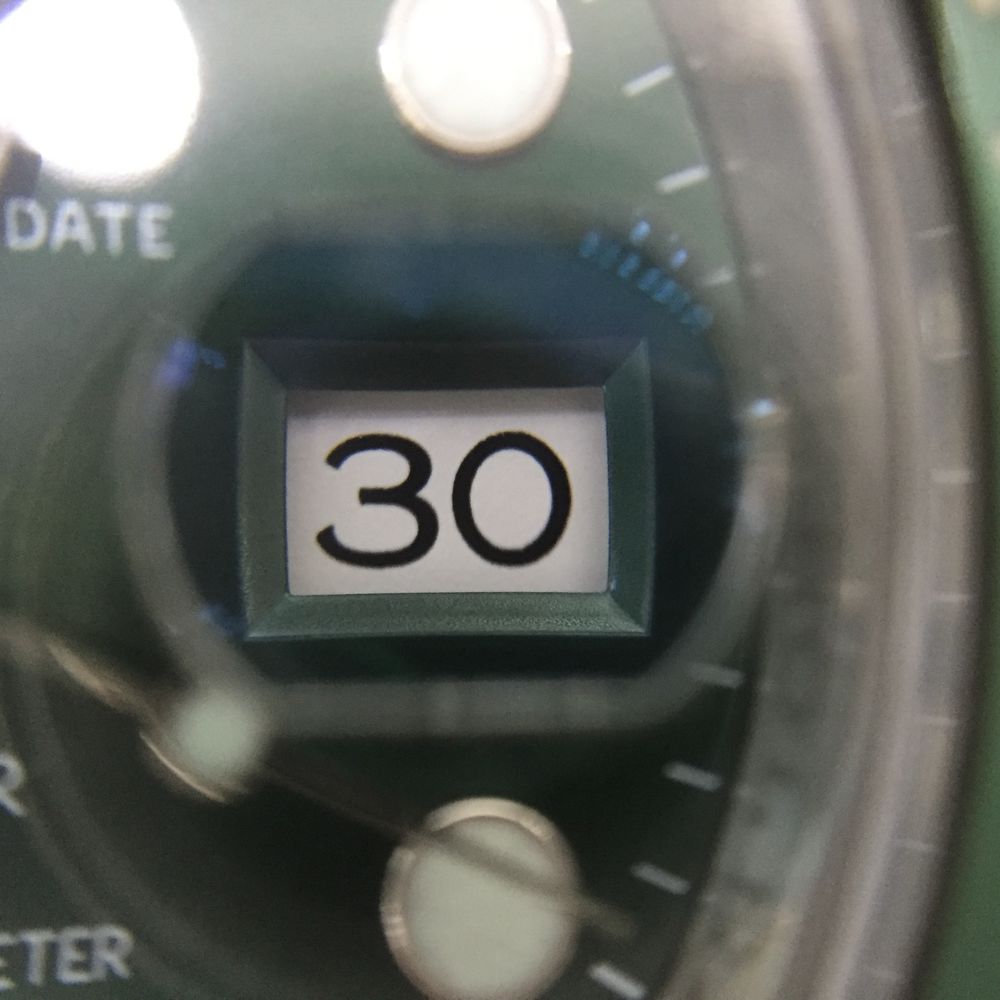
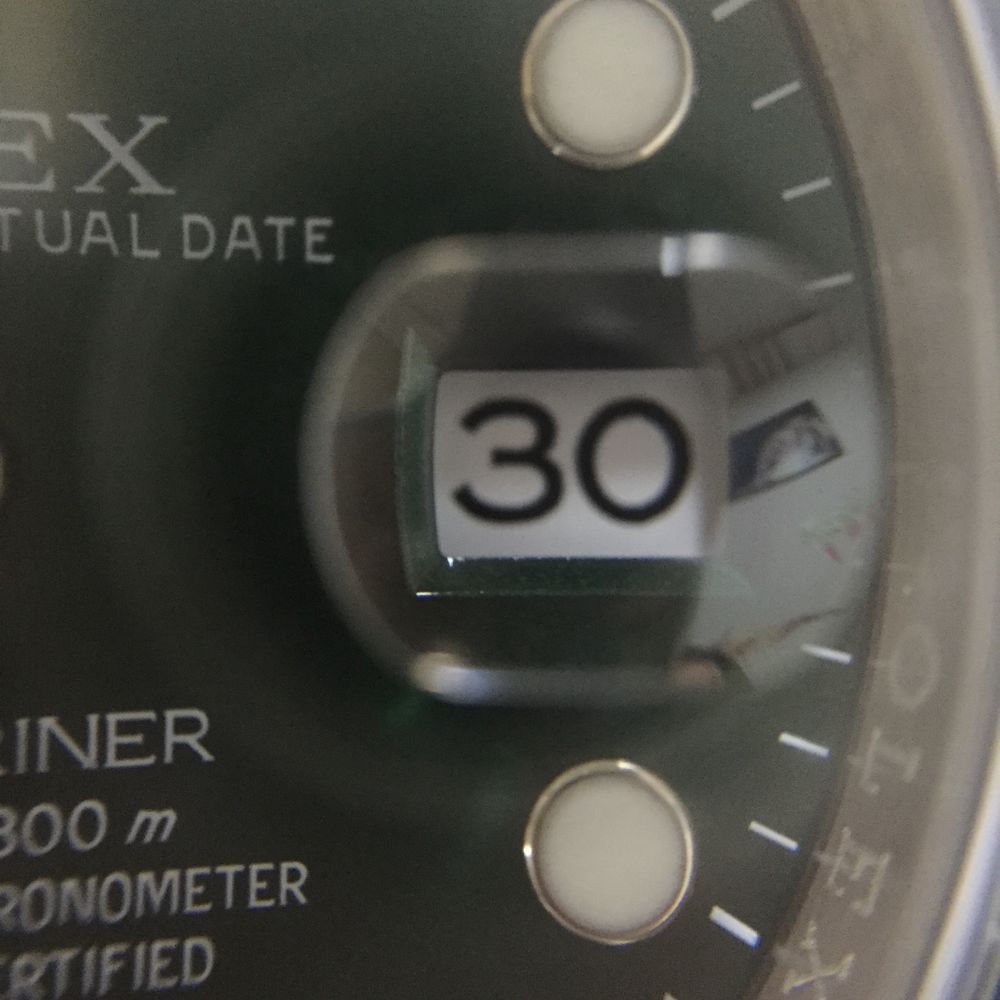
3. Rehaut Alignment: One of the Most Over-Used RL Reasons
Rehaut alignment creates a disproportionate amount of anxiety. The crown at 12 and the engraved lettering are easy to inspect in macro photos, but perspective changes them dramatically.
Ask three questions:
- Is the photo centered enough to judge the engraving?
- Is the misalignment obvious around the dial, or only at one angle?
- Would you notice it without zooming the photograph to several times life size?
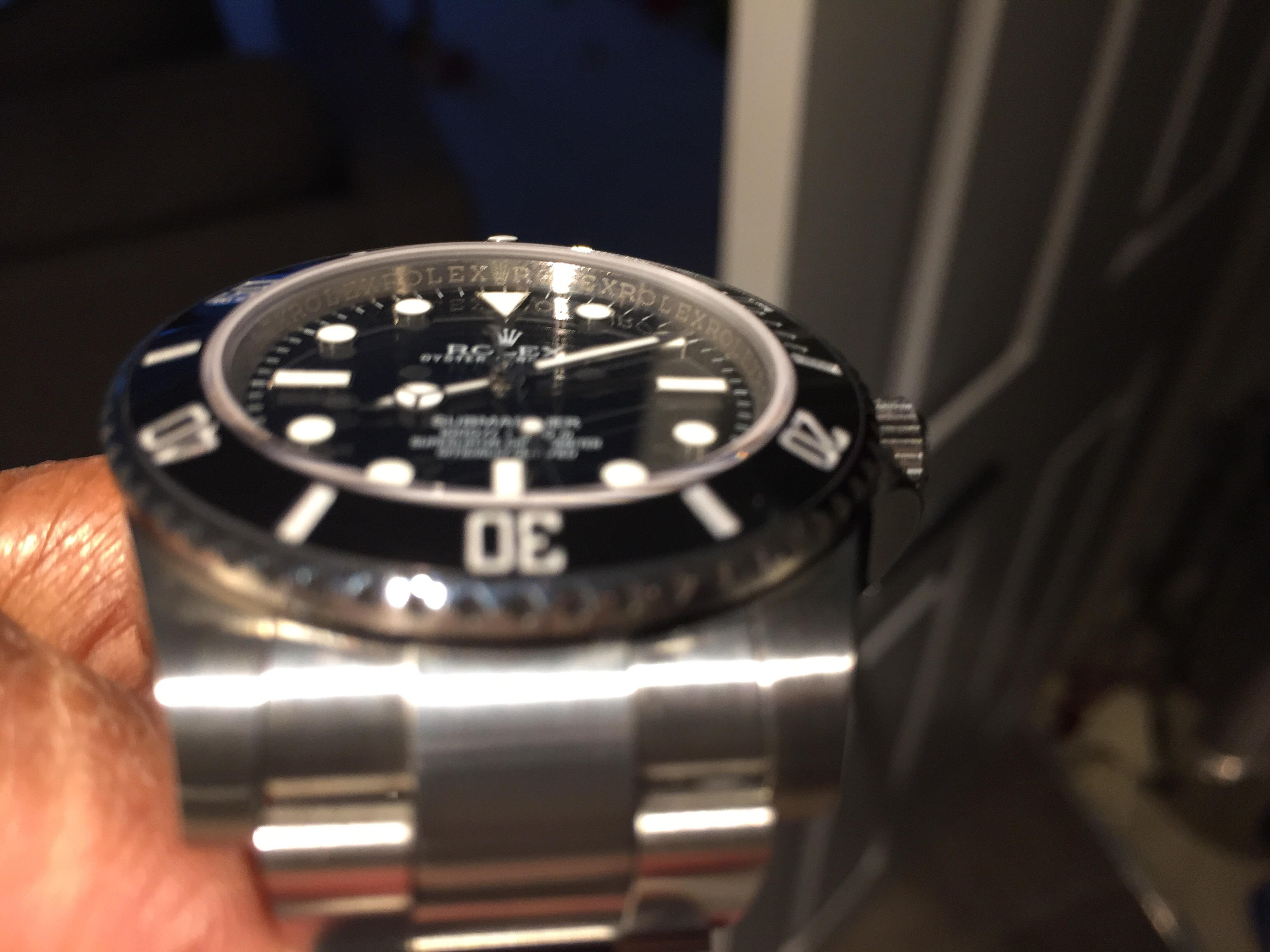
RepTimeQC’s own rules explicitly use slightly misaligned rehaut engraving as an example of something buyers can become too picky about. That does not mean rehaut never matters. It means severity and visibility matter more than whether the engraving is mathematically perfect.
4. Bezel and Pip: Check Alignment, Damage and Function
For Submariner-style watches, inspect the 12 o’clock pip, the relationship between the bezel markers and dial indices, engraving fill, and whether the bezel rotates correctly. For GMT-Master II models, also confirm that the bezel is the correct type and that the visual alignment matches the dial.
A bezel may simply be one click away from its preferred position, so request another photo before RL’ing if the only issue is alignment. A damaged insert, badly placed pip, obvious engraving defect or incorrect function is more serious.
Do not confuse bezel color accuracy with QC defect. Bezel color is often a version/factory characteristic. If the entire factory batch uses the same tone, changing the individual watch will not solve it.
5. Crystal Height, Clarity and Cyclops Tint: Factory Trait or Sample Problem?
Crystal discussions often become subjective. Higher transparency is not automatically “more genuine,” and AR tint can change under lighting. What you can inspect more reliably is:
- crystal sitting evenly in the case;
- obvious chips or scratches;
- Cyclops physically straight;
- consistent date magnification;
- whether the crystal edge/profile looks abnormal compared with other examples from the same version.

6. Solid End Links (SELs): A Black Line Is Not Automatically a Gap
SELs are another area where new buyers frequently overreact. The useful question is not “Can I see a line?” but “Can I see through the space between the SEL and the lug?”
On a Rolex-style bracelet, a narrow black joint line can be normal. A more actionable gap is one where light clearly passes through or where the end link sits visibly away from the lug. Compare all four corners because camera direction can make one side appear wider.
Recent QC threads still show buyers describing “huge SEL gaps” when the photos may only show shadows or normal joint lines. This is why the straight-on and underside/lug photos matter.
7. Bracelet and Clasp: Look Beyond the Logo
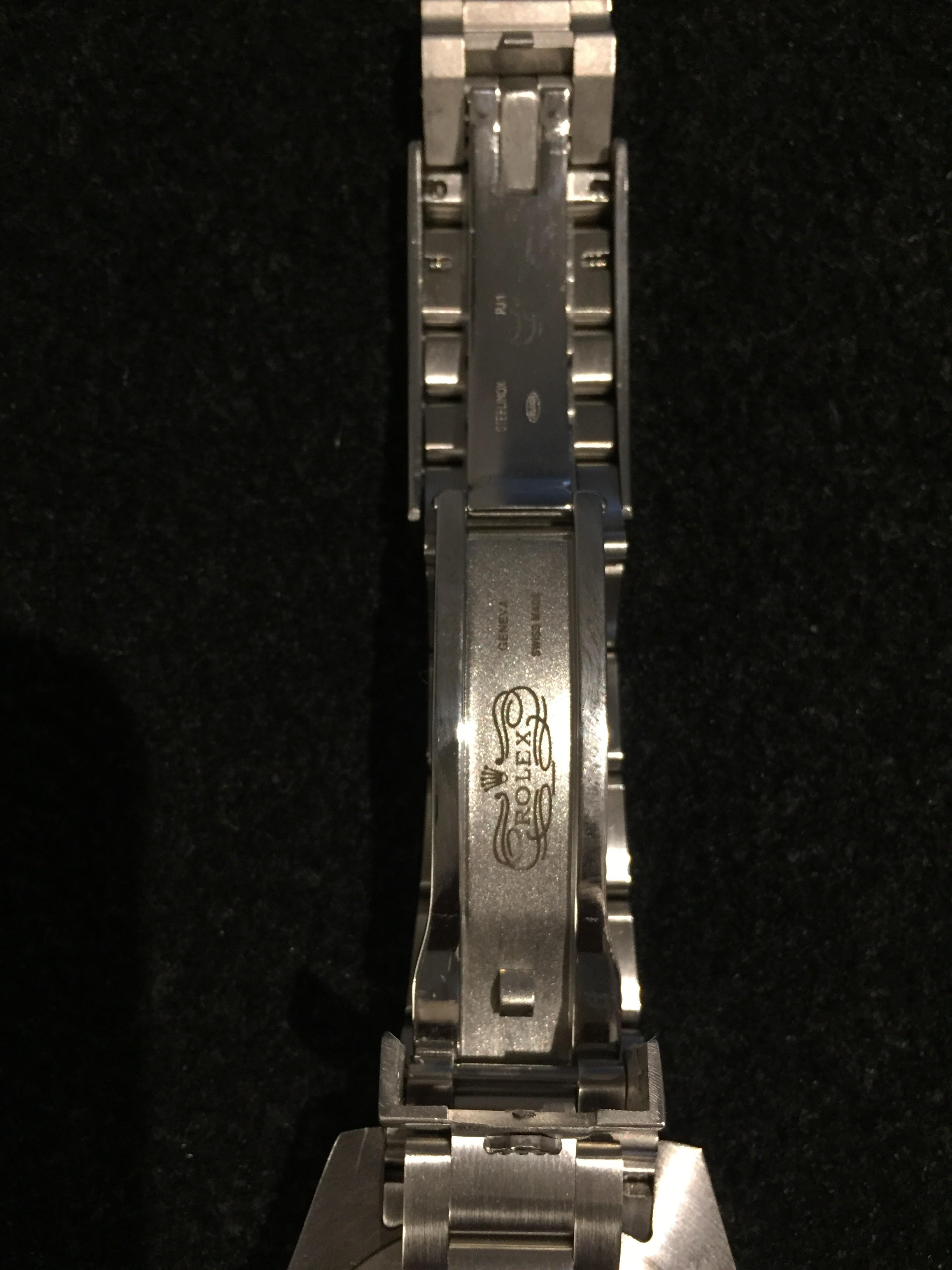
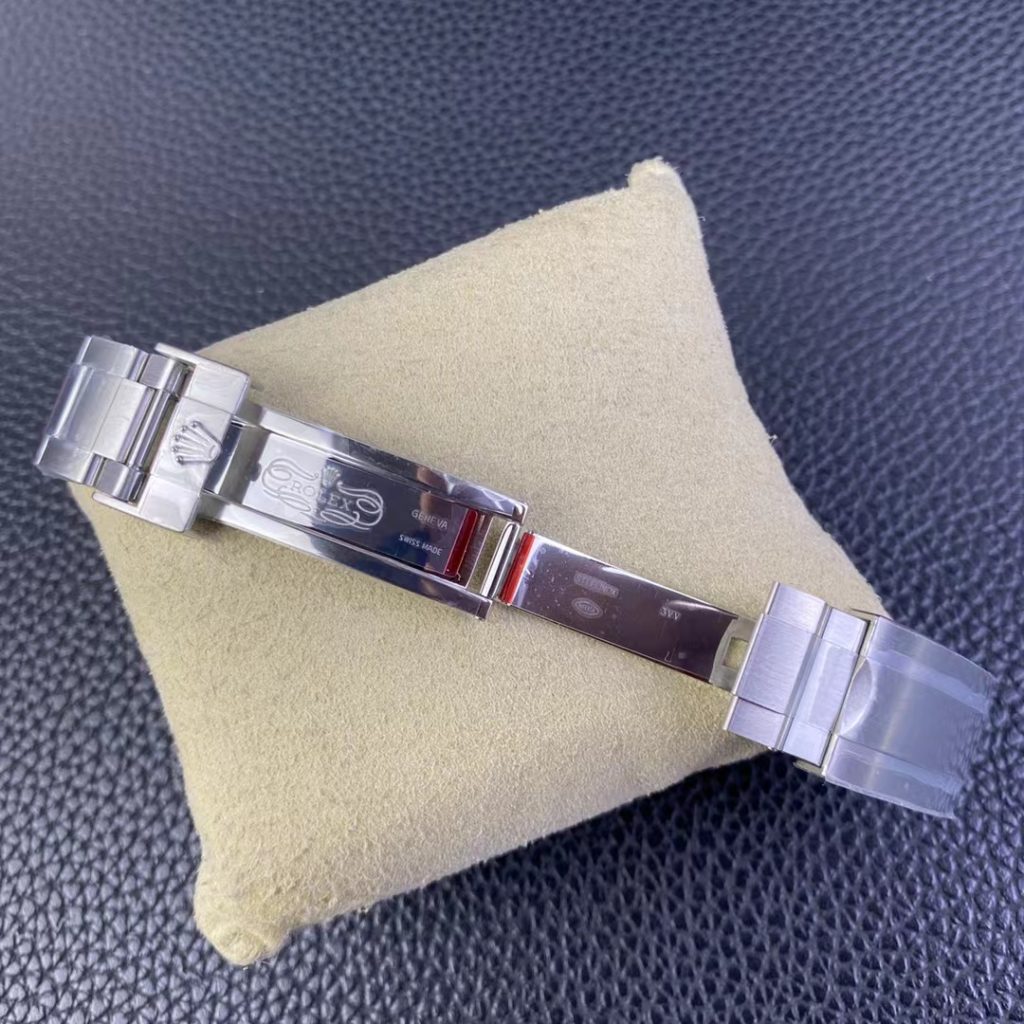
Clasp QC should include more than whether the Rolex coronet is present. Check:
- whether the clasp closes and locks correctly;
- edge finishing;
- obvious scratches or machining marks;
- engraving quality;
- bracelet articulation;
- link damage;
- the adjustment system appropriate to the model.
8. Hands, Hand Stack and Crown: Function Beats Surface Appearance
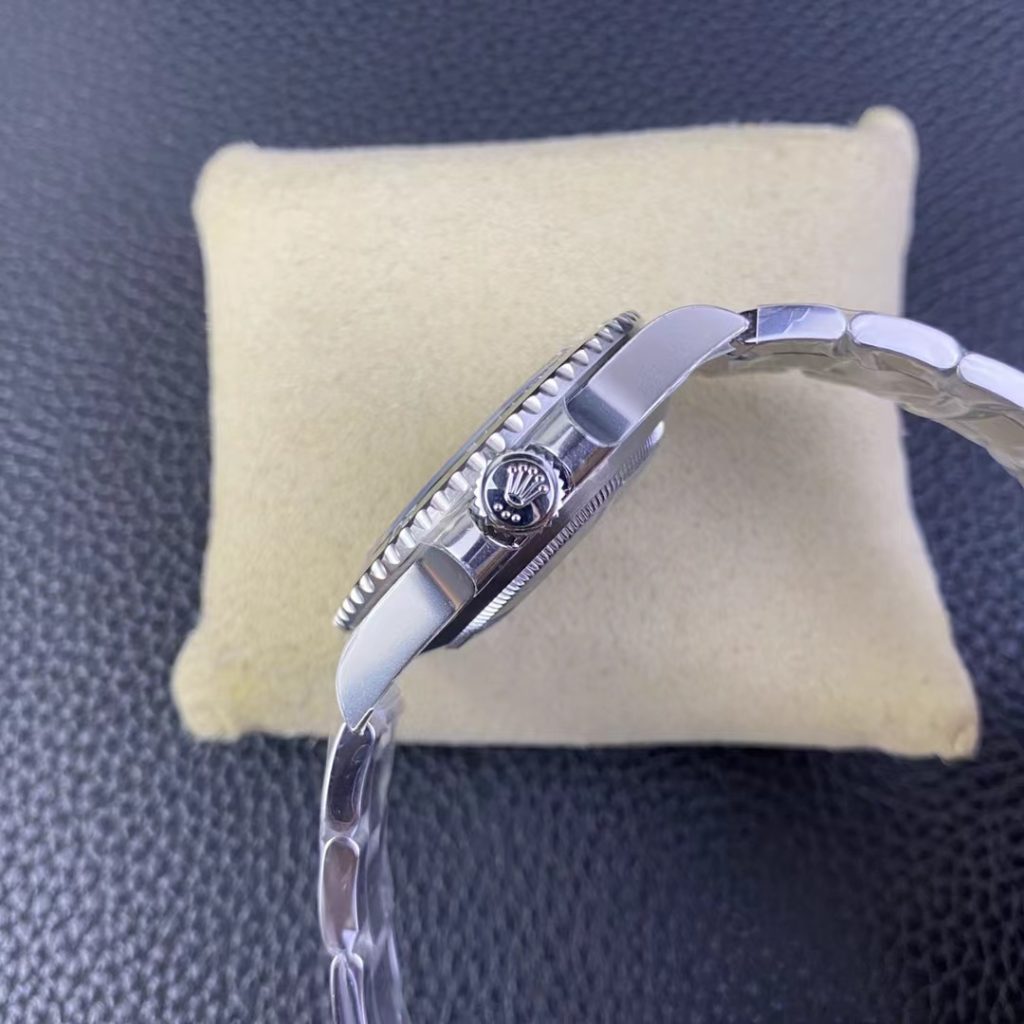
Macro photography can reveal hand finishing, burrs, shape and polish, but the more important QC question is whether the hands perform the correct function.

For a GMT-Master II-style watch, request a video that demonstrates how the local hour hand, GMT hand and date behave when the crown is operated. For a Daytona-style chronograph, check start/stop/reset and whether the chronograph seconds hand returns to zero. For a Datejust or Submariner Date, inspect date change and crown-setting behavior. A watch can photograph beautifully and still fail the function that defines the model.
9. Dial Printing: Separate Bad Printing from a Known Batch Font
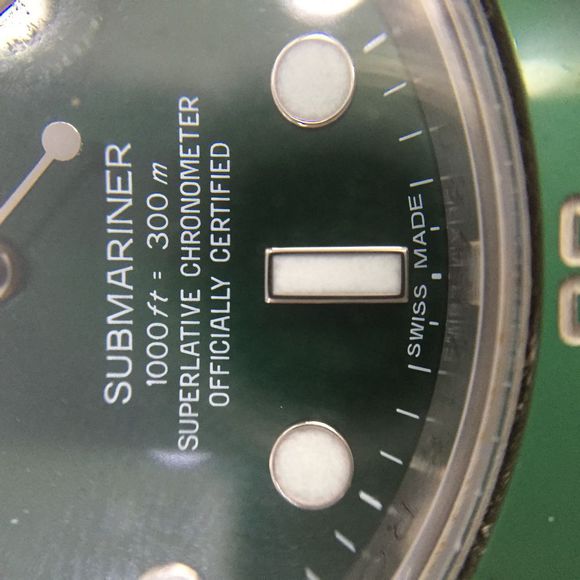
Look for missing ink, obvious bleeding, rotated text blocks, damaged coronet printing and visibly inconsistent application. Do not RL solely because the font does not perfectly match a genuine Rolex if every watch from that version has the same factory font. That is a factory-accuracy issue, not individual QC.
The same principle applies to older genuine-vs-replica comparisons. Our historical 116610LV photos show differences in printing, rehaut and overall execution, but they also show how much factory production changes over time. Old photos are valuable as visual education, not as a direct standard for a current 2026 Clean, VS, ARF or other batch.
10. Timegrapher Numbers: Useful, but Easy to Misread
RepTimeQC’s current posting guide gives broad community-acceptable ranges of approximately ±1 to 20 seconds/day for rate, 250–310° for amplitude, and 0.0–1.0 ms for beat error. These are community QC ranges, not universal movement-manufacturer specifications.
Do not read amplitude without context. Lift-angle settings affect the displayed amplitude, and current 2026 QC discussions still show buyers becoming concerned because a dealer used a lift angle they did not expect. If the numbers seem strange, ask for a short video or a retest before rejecting the watch.
More importantly, good timegrapher numbers do not prove the movement is the exact clone calibre claimed by a seller. A timegrapher measures timing behavior; it does not authenticate movement identity.
11. Model-Specific QC: Use a Different Checklist for Each Rolex Family
Submariner
- 12 o’clock pip and bezel alignment;
- marker alignment and dial printing;
- rehaut only after checking photo angle;
- SELs and bracelet fit;
- date/Cyclops on Date models;
- crown and case profile;
- bezel action;
- pressure-test evidence if water resistance matters.
GMT-Master II
- GMT hand and local-hour behavior;
- date and Cyclops;
- bezel insert alignment;
- hand stack and hand finishing;
- crystal profile;
- SELs and bracelet;
- movement/function video.
Datejust
- date-wheel centering across several dates;
- Cyclops alignment;
- dial color under neutral light;
- sunray finish;
- fluted/smooth bezel execution;
- rehaut and markers;
- Jubilee/Oyster bracelet and clasp.
Daytona
- all hour markers and subdial printing;
- chronograph hand reset to zero;
- start/stop/reset video;
- subdial alignment;
- tachymeter bezel alignment and engraving;
- SELs or Oysterflex fit, depending on model;
- timegrapher readings interpreted with the correct movement context.
For deeper model-specific checks, use our Submariner guide, GMT-Master II guide, Datejust guide and Daytona guide.
12. Five QC Mistakes First-Time Buyers Make
Mistake 1: Using a Grid on a Crooked Photo
Straight lines over a tilted image create false precision. Correct the perspective first or ask for a straighter photo.
Mistake 2: RL’ing a Factory Trait
If the same crystal height, date font or hand profile exists across the whole batch, another example from the same batch may look identical. Decide whether you dislike the factory/version, not the individual watch.
Mistake 3: Treating 10× Zoom as Wrist Distance
Macro photography is useful for locating a defect. It is not the scale at which you will wear the watch. After identifying a concern, view the photo at approximately real watch size.
Mistake 4: Ignoring Function
A beautiful GMT with incorrect GMT operation or a Daytona with a chronograph that will not reset is a more important QC problem than a tiny rehaut variance.
Mistake 5: Thinking QC Proves Long-Term Quality
QC can identify visible assembly and immediate function problems. It cannot prove future movement reliability, water resistance, material composition or service life. Those require separate evidence and, in some cases, testing.
A Practical GL/RL Decision Table
| QC issue | Usually GL | Ask for more evidence | Strong RL case |
|---|---|---|---|
| Index alignment | Tiny single-marker variance only visible under zoom | One visible tilt in angled photos | One severely crooked marker or several clearly misaligned markers |
| Date wheel | Slightly high/low but fully visible | Inconsistent dates or unclear angle | Numeral cropped, touching frame badly, or clearly displaced |
| Cyclops | Minor tint difference | Looks slightly rotated in one photo | Obviously crooked across multiple straight photos |
| Rehaut | Small engraving variance | Crown/letters appear off only from one angle | Grossly misaligned around the dial and obvious at normal size |
| SEL | Black joint line with no light-through gap | One corner looks wider in angled photo | Clear light passes through a large gap |
| Bezel | One-click position issue | Pip or insert looks slightly off | Damaged insert, obvious pip defect, or severe alignment issue |
| Dial printing | Microscopic font variation | Possible bleeding in one macro shot | Missing, damaged or clearly rotated printing |
| Movement/function | Functions work correctly | Unclear seller video | Required function fails or movement does not match represented specification |
| Timegrapher | Within normal community range | Odd reading with uncertain lift angle/setup | Persistent extreme reading confirmed by retest plus poor running behavior |
Real-World QC Is About Priorities, Not Perfection
One of the most useful lessons from years of replica-watch photographs is that the most visible differences are not always the things that matter most. Our old genuine-vs-replica Submariner photos show clear generation-level differences in color, crystal profile and finishing. Our newer Clean-vs-VS comparisons show that modern high-end replicas can differ from each other in much smaller ways—dial tone, date font, crystal profile, hand finishing and movement decoration.
That is why a good QC process should be ordered by importance:
- Does the watch have the correct model/function?
- Is anything physically damaged or clearly badly assembled?
- Are the dial, date, bezel, hands and bracelet acceptably aligned?
- Do movement functions operate correctly?
- Are the timing numbers reasonable for the movement/setup?
- Only then consider minor cosmetic details and factory-specific traits.
If you reverse that order, it is easy to reject a mechanically sound watch because the rehaut is a fraction off while overlooking a real function problem.
Replica Rolex QC FAQ
What do GL and RL mean?
GL means green light: you accept the specific watch. RL means red light: you reject that sample and ask the seller for another one. RL should be used for meaningful sample-level defects, not simply because the factory itself has a characteristic you dislike.
Is a slightly misaligned rehaut an automatic RL?
No. Check the camera angle and how visible the issue is at normal size. Rehaut alignment can matter, but slight engraving variance is commonly over-weighted in QC.
How much date-wheel misalignment is acceptable?
A date that is slightly high, low, left or right can still be acceptable if the numeral remains fully visible and the issue is not obvious at normal size. Cropped numerals or severe displacement are stronger RL reasons.
Does a black line beside the SEL mean there is a gap?
Not necessarily. A useful QC definition of a serious SEL gap is visible separation where light can pass through between the end link and lug. A dark joint line alone is not the same thing.
Can QC photos prove a watch is waterproof?
No. Water resistance requires testing of the individual assembled watch. Genuine Rolex depth ratings must not be assumed for a replica.
Can timegrapher numbers prove which movement is inside?
No. Timing data can show rate, amplitude and beat error under a particular setup, but it does not authenticate a claimed movement. Movement identity requires additional visual or technical evidence.
Final QC Checklist Before You GL
- Confirm model, reference style and claimed factory/version.
- Use at least one straight-on dial image.
- Check indices and dial printing without relying only on a grid.
- Check several dates if the watch has a date wheel.
- Inspect Cyclops position and date visibility.
- Check bezel and pip alignment.
- Inspect SELs for actual light-through gaps.
- Review bracelet and clasp finishing.
- Check rehaut from more than one angle.
- Request function video for GMT, chronograph or other complications.
- Review timegrapher data with movement/lift-angle context.
- Separate factory traits from defects unique to the sample.
- View the watch again at realistic size before making the final decision.
Bottom line: a good QC process is not a search for a flawless replica. It is a structured way to avoid a bad individual sample while keeping expectations realistic. The most useful question is not “Can I find any difference?” It is “Is this specific watch meaningfully worse than what this factory and version should normally deliver?”
